
PhD/Postdoc in Neuroimaging, Brain Connectivity and Depression
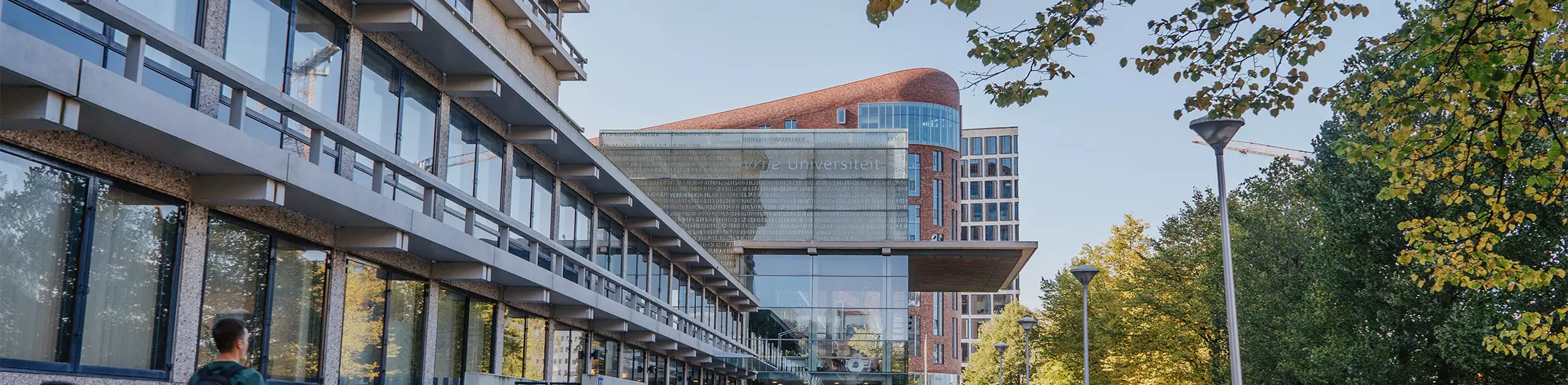
- Onderzoeksgebouw VU
- 0.8 / 1
- PhD, Researcher / Postdoc
- Closes on31-12-2026
- Amsterdam
- Faculty of Science
- Postdoc
- Publishing date18-11-2026
PhD/Postdoc in Neuroimaging, Brain Connectivity and Depression
- Onderzoeksgebouw VU
- Amsterdam
- 0.8 / 1
- Faculty of Science
- PhD, Researcher / Postdoc
- Postdoc
- Closes on31-12-2026
- Publishing date18-11-2026
Your function
How is depression reflected in the structure and function of the human brain? The goal of this project is to use neuroimaging, computational neuroscience and artificial intelligence to help us better understand the neural mechanisms underlying depression and how can we use these metrics for prediction of outcomes.
Are you passionate about neuroimaging, brain connectivity and computational approaches to understanding psychiatric disorders? Do you enjoy working with large-scale neuroimaging datasets, developing innovative analytical methods and collaborating with leading researchers across the world?
We are looking for a highly motivated researchers to join the Connectome Lab at Vrije Universiteit Amsterdam, as part of an ambitious international research consortium funded by the Wellcome Trust.
The Connectome Lab at the Center for Neurogenomics and Cognitive Research (CNCR), Vrije Universiteit Amsterdam, is seeking a PhD/Postdoctoral Researcher in Neuroimaging and Depression.
The position is embedded within an international, multidisciplinary Wellcome Trust-funded research programme that brings together researchers from neuroscience, psychiatry, neuroimaging and computational science to advance our understanding of depression.
Depression is a highly heterogeneous psychiatric condition, with substantial variation in symptoms, clinical trajectories and treatment responses. Understanding the neural mechanisms underlying this heterogeneity is one of the major challenges in modern biological psychiatry. The project aims to investigate how individual differences in brain structure, connectivity and functional organization relate to depression, and how advanced computational approaches can help identify reproducible patterns across individuals and patient populations.
To address these questions, we will combine large-scale structural MRI, diffusion MRI and resting-state fMRI datasets with advanced computational neuroscience, connectomics, machine learning and AI-based approaches.
You will develop and apply neuroimaging methods to investigate structural and functional brain networks, integrate information across imaging modalities, and contribute to methodological innovation in computational psychiatry.
An important aspect of the position is its international collaborative character. You will work closely with researchers from multiple institutions within the consortium, contributing to joint analyses, methodological development, scientific publications and international scientific exchange.
You will be part of the computational neuroimaging group led by Martijn van den Heuvel, working in an interdisciplinary environment that brings together expertise in neuroimaging, computational neuroscience, psychiatry, genetics, psychology and artificial intelligence.
Your duties
- analyse large-scale structural MRI, diffusion MRI and resting-state fMRI datasets, with a particular focus on depression and psychiatric neuroscience
- develop and apply advanced neuroimaging pipelines for cortical reconstruction, tractography, functional connectivity and connectome analysis
- investigate alterations and individual differences in brain structure, connectivity and network organization associated with depression
- develop computational and statistical approaches for analysing large-scale brain networks and their relationships with clinical characteristics
- integrate structural and functional neuroimaging information across imaging modalities, cohorts and international datasets
- explore the use of machine learning, artificial intelligence and large language models (LLMs) for neuroimaging analysis, computational modelling and large-scale data integration
- contribute to the development and application of innovative computational approaches in biological psychiatry
- collaborate actively with researchers within the consortium, contributing to shared research questions, analyses and publications
- develop reproducible and open neuroimaging workflows and contribute to shared computational resources
- author and co-author scientific publications in international peer-reviewed journals
- present findings at national and international scientific meetings and consortium workshops
- contribute to the broader scientific activities of the Connectome Lab, CNCR and Vrije Universiteit Amsterdam, including teaching activities where appropriate
Requirements
We are looking for a candidate with a MSc/PhD in neuroscience, neuroimaging, computational neuroscience, biomedical engineering, physics, computer science, artificial intelligence, mathematics, or a related quantitative discipline.
Your profile
We particularly encourage candidates to apply who have experience with:
- neuroimaging research in depression, psychiatry or other neurological and psychiatric disorders
- structural MRI
- resting-state fMRI and functional connectivity analysis
- widely used neuroimaging software packages
- processing, quality control and analysis of large-scale neuroimaging datasets
- connectomics, network neuroscience and brain network analysis
- computational modelling of brain structure and function
- statistical modelling of neuroimaging and clinical data.
- Programming skills are important. You should have substantial experience with Python, MATLAB, R, Bash and/or comparable programming languages, and be comfortable developing, validating and maintaining reproducible computational pipelines.
- Candidates with expertise in AI, machine learning or LLM-based research approaches are encouraged to apply.
- computational psychiatry and transdiagnostic approaches to psychiatric neuroscience
- high-performance computing and large-scale computational analyses
- open-source software development and version control
- network science, computational modelling and multimodal data integration
- We particularly value candidates who think critically about methodological challenges, enjoy working with complex datasets and are motivated to develop new scientific approaches rather than simply applying existing pipelines.
- be motivated to work within an international research consortium
As a university, we strive for equal opportunities for all, recognising that diversity takes many forms. We believe that diversity in all its complexity is invaluable for the quality of our teaching, research and service. We are always looking for talent with diverse backgrounds and experiences. This also means that we are committed to creating an inclusive community so that we can use diversity as an asset.
We realise that each individual brings a unique set of skills, expertise and mindset. Therefore we are happy to invite anyone who recognises themselves in the profile to apply, even if you do not meet all the requirements.
What do we offer?
A challenging position in a socially engaged organisation. At VU Amsterdam, you contribute to education, research and service for a better world. And that is valuable. So in return for your efforts, we offer in case of PhD or PostDoc:
- a PhD salary of minimum € 3.204,00 (year 1) and maximum € 4.051 (year 4) gross per month, on a full-time basis. This is based on UFO profile PhD candidate and a 4-year contract (initial 1-year, extended by 3 years following positive evaluation, or
- a PostDoc salary of minimum € 3.706 (scale 10) and maximum € 5.760 (scale 10) gross per month, on a full-time basis. This is based on UFO Researcher 4. The exact salary depends on your education and experience. This position is for at least 0,8 FTE. Your employment contract will initially last 1 year, with the possibility to extend to 3 years.
We also offer you attractive fringe benefits and regulations. Some examples:
- A full-time 38-hour working week comes with a holiday leave entitlement of 232 hours per year. If you choose to work 40 hours, you have 96 extra holiday leave hours on an annual basis. For part-timers, this is calculated pro rata.
- 8% holiday allowance and 8.3% end-of-year bonus
- solid pension scheme (ABP)
- contribution to commuting expenses
- optional model for designing a personalized benefits package
About us
Research environment
You will join the Connectome Lab at Vrije Universiteit Amsterdam. Our research focuses on understanding the architecture of the human brain and how its network organization relates to cognition, individual variation, brain disorders and evolution. You will work in a multidisciplinary team of PhD candidates, postdoctoral researchers and students with backgrounds spanning neuroimaging, network neuroscience, genetics, artificial intelligence, computational neuroscience and psychology. The project is embedded within the Center for Neurogenomics and Cognitive Research (CNCR), providing a highly interdisciplinary research environment and opportunities for collaboration within VU Amsterdam and with national and international research groups.
Faculty of Science
Working at the Faculty of Science means collaborating with students, lecturers and researchers who are focused on their field, yet have a broad view of the world. We are proud of a positive and inclusive workplace culture within the faculty, where we work together with great energy and a pragmatic attitude to tackle social challenges. At the Faculty of Science, scientists and students work on fundamental and complex societal issues for a sustainable, healthy and just future.
From forest fires to big data, from obesity to malnutrition, from helium to the universe and from genetics to medicine: our education and research cover the full breadth of science, from molecules to mankind. Our academic education and research are highly experimental, technical and interdisciplinary in nature. That is why we collaborate extensively with leading scientific institutes and industry. The faculty has more than 8,000 students studying in one of the 39 programms and employs more than 1,400 staff across 10 scientific departments, making us one of the largest science faculties in the Netherlands.
Vrije Universiteit Amsterdam
Vrije Universiteit Amsterdam stands for values-driven education and research. We are open-minded experts with the ability to think freely - a broader mind. Maintaining an entrepreneurial perspective and concentrating on diversity, significance and humanity, we work on sustainable solutions with social impact. By joining forces, across the boundaries of disciplines, we work towards a better world for people and planet. Together we create a safe and respectful working and study climate, and an inspiring environment for education and research. Learn more about our codes of conduct
We are located on one physical campus, in the heart of Amsterdam's Zuidas business district, with excellent location and accessibility. Over 6,150 staff work at the VU and over 31,000 students attend academic education.
Diversity
Diversity is the driving force of VU Amsterdam. VU wants to be accessible and receptive to diversity in disciplines, cultures, ideas, nationalities, beliefs, preferences and worldviews. We believe that trust, respect, interest and differences lead to new insights and innovation, to sharpness and clarity, to excellence and a broader understanding.
We stand for an inclusive community and believe that diversity and internationalisation contribute to the quality of education, research and our services.
Therefore, we are always searching for people whose backgrounds and experience contribute to the diversity of the VU community.
Interested
Are you interested in this position and do you believe that your experience will contribute to the further development of our university? In that case, we encourage you to submit your application.
Submitting a diploma, a reference check and a knowledge security check are part of the application process.
Applications received by e-mail will not be considered.
Acquisition in response to this advertisement is not appreciated.
Your function
How is depression reflected in the structure and function of the human brain? The goal of this project is to use neuroimaging, computational neuroscience and artificial intelligence to help us better understand the neural mechanisms underlying depression and how can we use these metrics for prediction of outcomes.
Are you passionate about neuroimaging, brain connectivity and computational approaches to understanding psychiatric disorders? Do you enjoy working with large-scale neuroimaging datasets, developing innovative analytical methods and collaborating with leading researchers across the world?
We are looking for a highly motivated researchers to join the Connectome Lab at Vrije Universiteit Amsterdam, as part of an ambitious international research consortium funded by the Wellcome Trust.
The Connectome Lab at the Center for Neurogenomics and Cognitive Research (CNCR), Vrije Universiteit Amsterdam, is seeking a PhD/Postdoctoral Researcher in Neuroimaging and Depression.
The position is embedded within an international, multidisciplinary Wellcome Trust-funded research programme that brings together researchers from neuroscience, psychiatry, neuroimaging and computational science to advance our understanding of depression.
Depression is a highly heterogeneous psychiatric condition, with substantial variation in symptoms, clinical trajectories and treatment responses. Understanding the neural mechanisms underlying this heterogeneity is one of the major challenges in modern biological psychiatry. The project aims to investigate how individual differences in brain structure, connectivity and functional organization relate to depression, and how advanced computational approaches can help identify reproducible patterns across individuals and patient populations.
To address these questions, we will combine large-scale structural MRI, diffusion MRI and resting-state fMRI datasets with advanced computational neuroscience, connectomics, machine learning and AI-based approaches.
You will develop and apply neuroimaging methods to investigate structural and functional brain networks, integrate information across imaging modalities, and contribute to methodological innovation in computational psychiatry.
An important aspect of the position is its international collaborative character. You will work closely with researchers from multiple institutions within the consortium, contributing to joint analyses, methodological development, scientific publications and international scientific exchange.
You will be part of the computational neuroimaging group led by Martijn van den Heuvel, working in an interdisciplinary environment that brings together expertise in neuroimaging, computational neuroscience, psychiatry, genetics, psychology and artificial intelligence.
Your duties
- analyse large-scale structural MRI, diffusion MRI and resting-state fMRI datasets, with a particular focus on depression and psychiatric neuroscience
- develop and apply advanced neuroimaging pipelines for cortical reconstruction, tractography, functional connectivity and connectome analysis
- investigate alterations and individual differences in brain structure, connectivity and network organization associated with depression
- develop computational and statistical approaches for analysing large-scale brain networks and their relationships with clinical characteristics
- integrate structural and functional neuroimaging information across imaging modalities, cohorts and international datasets
- explore the use of machine learning, artificial intelligence and large language models (LLMs) for neuroimaging analysis, computational modelling and large-scale data integration
- contribute to the development and application of innovative computational approaches in biological psychiatry
- collaborate actively with researchers within the consortium, contributing to shared research questions, analyses and publications
- develop reproducible and open neuroimaging workflows and contribute to shared computational resources
- author and co-author scientific publications in international peer-reviewed journals
- present findings at national and international scientific meetings and consortium workshops
- contribute to the broader scientific activities of the Connectome Lab, CNCR and Vrije Universiteit Amsterdam, including teaching activities where appropriate
Requirements
We are looking for a candidate with a MSc/PhD in neuroscience, neuroimaging, computational neuroscience, biomedical engineering, physics, computer science, artificial intelligence, mathematics, or a related quantitative discipline.
Your profile
We particularly encourage candidates to apply who have experience with:
- neuroimaging research in depression, psychiatry or other neurological and psychiatric disorders
- structural MRI
- resting-state fMRI and functional connectivity analysis
- widely used neuroimaging software packages
- processing, quality control and analysis of large-scale neuroimaging datasets
- connectomics, network neuroscience and brain network analysis
- computational modelling of brain structure and function
- statistical modelling of neuroimaging and clinical data.
- Programming skills are important. You should have substantial experience with Python, MATLAB, R, Bash and/or comparable programming languages, and be comfortable developing, validating and maintaining reproducible computational pipelines.
- Candidates with expertise in AI, machine learning or LLM-based research approaches are encouraged to apply.
- computational psychiatry and transdiagnostic approaches to psychiatric neuroscience
- high-performance computing and large-scale computational analyses
- open-source software development and version control
- network science, computational modelling and multimodal data integration
- We particularly value candidates who think critically about methodological challenges, enjoy working with complex datasets and are motivated to develop new scientific approaches rather than simply applying existing pipelines.
- be motivated to work within an international research consortium
As a university, we strive for equal opportunities for all, recognising that diversity takes many forms. We believe that diversity in all its complexity is invaluable for the quality of our teaching, research and service. We are always looking for talent with diverse backgrounds and experiences. This also means that we are committed to creating an inclusive community so that we can use diversity as an asset.
We realise that each individual brings a unique set of skills, expertise and mindset. Therefore we are happy to invite anyone who recognises themselves in the profile to apply, even if you do not meet all the requirements.
What do we offer?
A challenging position in a socially engaged organisation. At VU Amsterdam, you contribute to education, research and service for a better world. And that is valuable. So in return for your efforts, we offer in case of PhD or PostDoc:
- a PhD salary of minimum € 3.204,00 (year 1) and maximum € 4.051 (year 4) gross per month, on a full-time basis. This is based on UFO profile PhD candidate and a 4-year contract (initial 1-year, extended by 3 years following positive evaluation, or
- a PostDoc salary of minimum € 3.706 (scale 10) and maximum € 5.760 (scale 10) gross per month, on a full-time basis. This is based on UFO Researcher 4. The exact salary depends on your education and experience. This position is for at least 0,8 FTE. Your employment contract will initially last 1 year, with the possibility to extend to 3 years.
We also offer you attractive fringe benefits and regulations. Some examples:
- A full-time 38-hour working week comes with a holiday leave entitlement of 232 hours per year. If you choose to work 40 hours, you have 96 extra holiday leave hours on an annual basis. For part-timers, this is calculated pro rata.
- 8% holiday allowance and 8.3% end-of-year bonus
- solid pension scheme (ABP)
- contribution to commuting expenses
- optional model for designing a personalized benefits package
About us
Research environment
You will join the Connectome Lab at Vrije Universiteit Amsterdam. Our research focuses on understanding the architecture of the human brain and how its network organization relates to cognition, individual variation, brain disorders and evolution. You will work in a multidisciplinary team of PhD candidates, postdoctoral researchers and students with backgrounds spanning neuroimaging, network neuroscience, genetics, artificial intelligence, computational neuroscience and psychology. The project is embedded within the Center for Neurogenomics and Cognitive Research (CNCR), providing a highly interdisciplinary research environment and opportunities for collaboration within VU Amsterdam and with national and international research groups.
Faculty of Science
Working at the Faculty of Science means collaborating with students, lecturers and researchers who are focused on their field, yet have a broad view of the world. We are proud of a positive and inclusive workplace culture within the faculty, where we work together with great energy and a pragmatic attitude to tackle social challenges. At the Faculty of Science, scientists and students work on fundamental and complex societal issues for a sustainable, healthy and just future.
From forest fires to big data, from obesity to malnutrition, from helium to the universe and from genetics to medicine: our education and research cover the full breadth of science, from molecules to mankind. Our academic education and research are highly experimental, technical and interdisciplinary in nature. That is why we collaborate extensively with leading scientific institutes and industry. The faculty has more than 8,000 students studying in one of the 39 programms and employs more than 1,400 staff across 10 scientific departments, making us one of the largest science faculties in the Netherlands.
Vrije Universiteit Amsterdam
Vrije Universiteit Amsterdam stands for values-driven education and research. We are open-minded experts with the ability to think freely - a broader mind. Maintaining an entrepreneurial perspective and concentrating on diversity, significance and humanity, we work on sustainable solutions with social impact. By joining forces, across the boundaries of disciplines, we work towards a better world for people and planet. Together we create a safe and respectful working and study climate, and an inspiring environment for education and research. Learn more about our codes of conduct
We are located on one physical campus, in the heart of Amsterdam's Zuidas business district, with excellent location and accessibility. Over 6,150 staff work at the VU and over 31,000 students attend academic education.
Diversity
Diversity is the driving force of VU Amsterdam. VU wants to be accessible and receptive to diversity in disciplines, cultures, ideas, nationalities, beliefs, preferences and worldviews. We believe that trust, respect, interest and differences lead to new insights and innovation, to sharpness and clarity, to excellence and a broader understanding.
We stand for an inclusive community and believe that diversity and internationalisation contribute to the quality of education, research and our services.
Therefore, we are always searching for people whose backgrounds and experience contribute to the diversity of the VU community.
Interested
Are you interested in this position and do you believe that your experience will contribute to the further development of our university? In that case, we encourage you to submit your application.
Submitting a diploma, a reference check and a knowledge security check are part of the application process.
Applications received by e-mail will not be considered.
Acquisition in response to this advertisement is not appreciated.
Application procedure
Application received
We have received your application successfully. We aim to give you an initial response as soon as possible. This is generally two weeks after the deadline.
Screening CV
A selection committee will assess whether you meet the requirements for the vacancy. If your assessment is positive, we will invite you for a first (hybrid) job interview.
1st Interview
Job interviews usually take place at a VU Campus, but sometimes you will be invited for a video interview first. The VU uses MS teams for this purpose.
2nd Interview
For the second interview, we usually ask you to come to our VU campus.
Assessment
Depending on the position, the submission of a Certificate of Good Conduct (VOG) and/or an assessment may be part of the application procedure. The submission of a diploma is always requested at the time of onboarding.
Optional background check
Onboarding
Welcome you are employed by VU Amsterdam!!!
Other interesting vacancies

Postdoc in Neuroimaging, Neurodiversity and Brain Evolution
- 0.8 / 1
- Faculty of Science
- Researcher / Postdoc
- Postdoc
- Closes on15-12-2026
- Publishing date26-10-2026
-
0.0 km
PhD Position in Neuroimaging, LLM, Genetics and Cross-species comparison
- 1 / 1
- Faculty of Science
- PhD
- MSc
- Closes on15-12-2026
- Publishing date26-10-2026
-
0.0 km
1. PhD Position in Fungal Cell Biology
- 0.8 / 1
- Faculty of Science
- PhD
- MSc
- Closes on27-11-2026
- Publishing date13-11-2026
-
0.0 km
Postdoc in Experimental Geodynamic Modelling
- 1 / 1
- Faculty of Science
- Researcher / Postdoc
- Postdoc
- Closes on07-12-2026
- Publishing date05-11-2026
-
0.0 km
Post Doc: Learning interactions in collective cell migration
- 0.9 / 1
- Faculty of Science
- Researcher / Postdoc
- MSc
- Closes on31-12-2026
- Publishing date20-07-2026
-
0.0 km
PhD: Learning interactions in collective cell migration
- 0.9 / 1
- Faculty of Science
- PhD
- MSc
- Closes on31-12-2026
- Publishing date20-07-2026
-
0.0 km
Don't miss out on your dream job at VU Amsterdam
This website uses cookies
We, and third parties, use cookies on our website. We use cookies to ensure that our website functions properly, to store your preferences, to gain insight into visitor behavior, but also for marketing and social media purposes (showing personalized advertisements). By clicking 'Accept', you agree to the use of all cookies. In our Cookie Statement. you can read more about the cookies we use and save or change your preferences. By clicking 'Refuse' you only agree to the use of functional cookies.